I’ve raced this car in some form or another for 26 years. Autocross, drag racing, road course time trials, the gamut. I’ve spun it, overrun turns and ended up in sand traps, all of it. But until now, I haven’t hit anything.
Well, I hit something.
Salem Motorsports Park is a fantastic autocross venue. Its unique layout creates fast courses that are super fun. But it’s narrow and you have to be careful. I failed at the careful part. On the most recent event, there was a slalom right after the start. On my third run, I attacked that slalom with terrible ferocity and was rewarded with a loss of traction.
The car darted off course and hit grass, then pavement, then grass. I was heading directly at a telephone pole. I gunned the throttle and pitched the car a bit to miss this immovable object and instead found a cone cart that was being used to hold up the timing display for the finish.
Before the internet explodes with all kinds of reasons, this was my fault. I pushed it and lost the gamble.
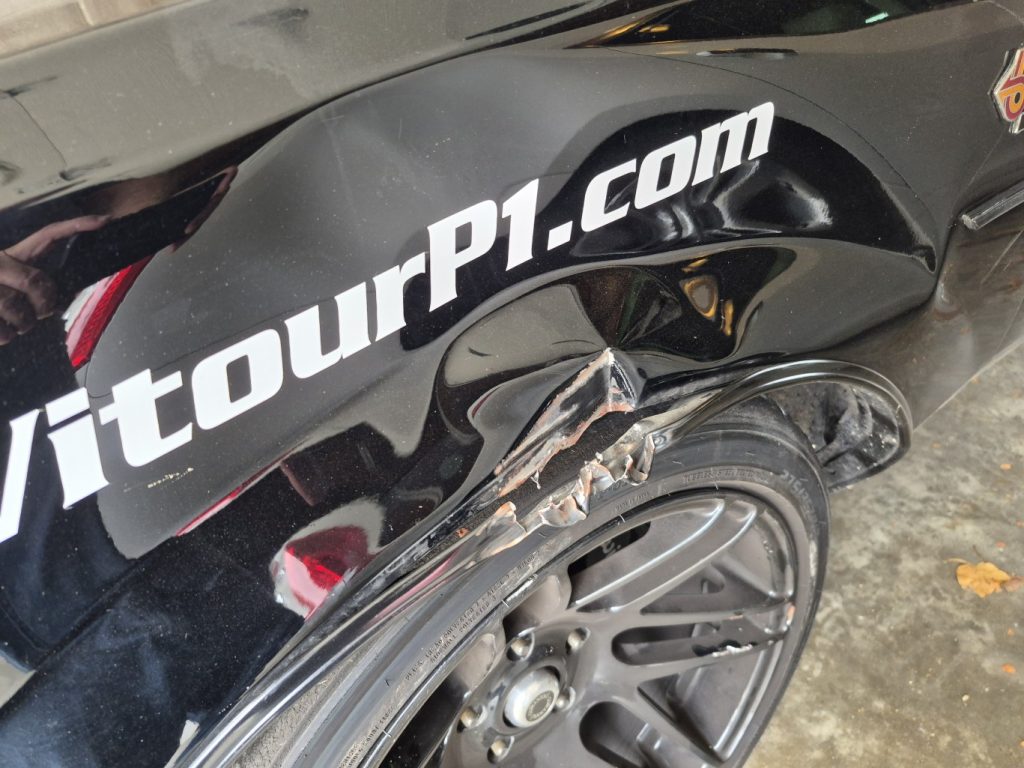
The damage? A destroyed fender. The extra velocity from trying to avoid the telephone pole sent me up an embankment. Amazingly, the car went into reverse, backed off the embankment, and returned to the paddock unassisted.
Once in back in paddock, I assessed the damage, dove into the toolbox, and proceeded to pry the damaged fender away from the tire. We returned to the queue and resumed competition.
This was a good move. The limit had been found, so the remaining runs I kept it under control and was rewarded with at 1.5s class win, and the Buick’s first 10 top raw and 9th place indexed finish. We got comments about how hooked up and nasty the car looked.

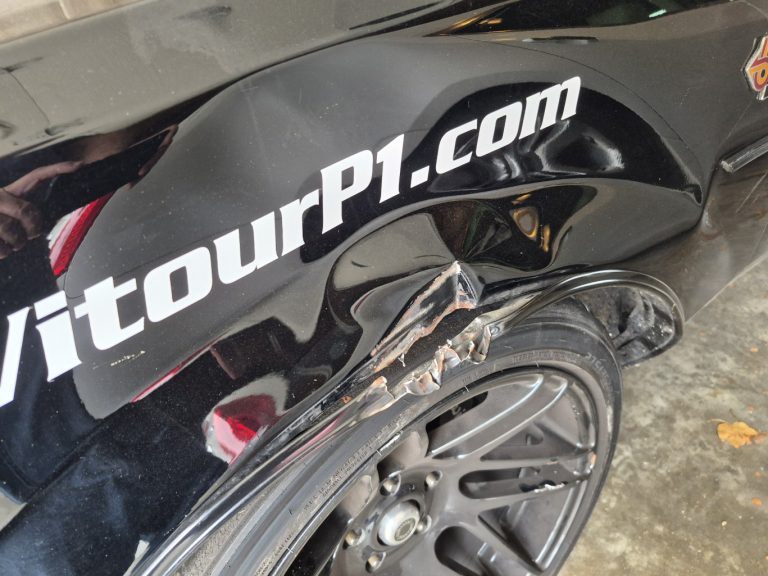
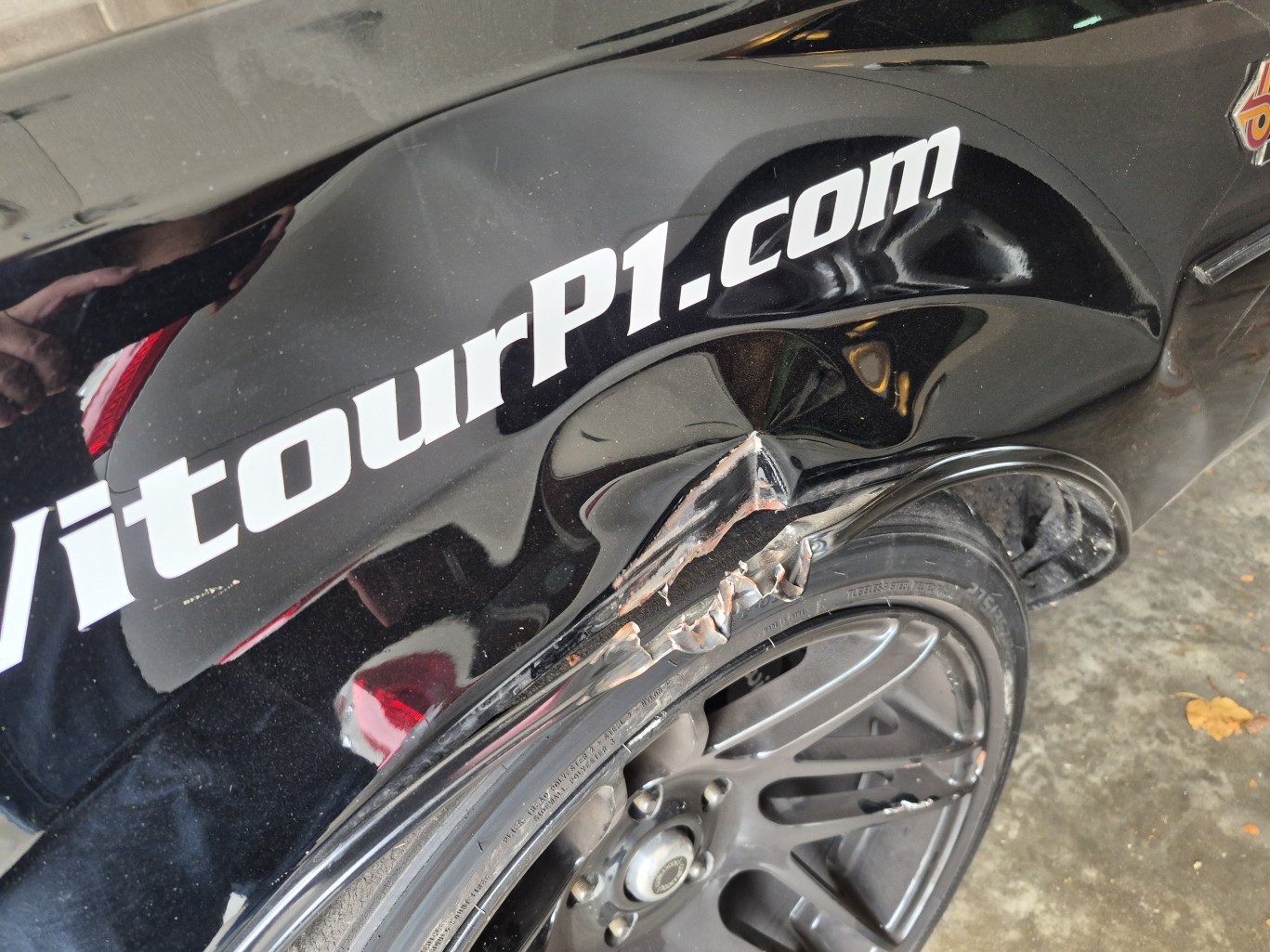
But the car was “wrecked.” The driver front fender was destroyed. Amazingly, the impact had happened in exactly the best spot. It caved in the fender at the top of the wheel arch. That’s it. But it stretched the metal and almost cut the wheelwell trim in two. The fender had to be replaced.
The plan was to park the car, finish the Corvette, and deal with the fender over the winter. Then, the day after the crash, we got a call. We were off the waiting list for the Optima Ultimate Street Car event in Indianapolis in just two weeks. This event is a bucket list track. The Indianapolis Motor Speeway, the Brickyard, but in the F1 configuration. I’m going. But I can’t do an Optima Event with a crunched fender. That would be rude.
So, an internet search and I lucked into a fender. It was in… Indianapolis. I drove up there, gave the very kind gentleman $40, and came home with a clean but dented fender from a 1983 Regal.

I stripped the fender, removed the undercoat from the inside by freezing it with computer dust spray, and then stripped it to bare metal with chemical stripper followed by 80 grid sandpaper.
After cleaning it, I began the painstaking process of repairing the dents and painting it. I got the fender all the way to the last seal coat and the finish wrinkled. In attempting to get this done quickly and cheaply, I had elected to use leftover materials from the Corvette’s paint job. That was a mistake. The chemicals had aged out, and it wiped out three days of work. I had to strip it back to bare metal and start over.

This time, I bought all new materials from the local auto paint shop and spaced the work out over several evenings. This is a lesson for anybody reading: When you’re done with a job, throw the leftovers out. If you try to use them a year later, they won’t work.
After a careful sequence of metalwork, epoxy primer, bodywork, 2K filler, and a sealer, color, and clear, I had a mirror finish on the replacement fender. Given how hard it is to paint things black, I’m really satisfied with this result.

With a completed panel, the only thing left is to put it on the car. It’s a pretty straightforward teardown and rebuild. All the internets and AIs said the entire fender including the inner fender and the wheel well had to come off as a unit, but the internets and the AIs are wrong. As usual. I had no trouble getting the damaged fender off.
The front bumper and header panel have to come off, then you can remove the bolts along the top of the panel in the engine bay, in the door jam, and the four 10mm bolts in the wheel arch. This includes detaching the hood hinge, so make sure you prop the hood up with something sturdy.

Once the new fender is carefully wrestled into place, I relearned what I’d learned years ago: by 1987 the dies on these stampings had worn out and there were a lot of shims to line up the front end. With this fender coming from an early car, I had to pull some of the shims to get the fender mostly lined up with the door and hood, but it’s close enough.
There was also some cosmetic damage to the wheel, I ground that smooth, fixed the contour with filler, and touched it up. It’s a three foot repair, so I’m pretty happy with it.

I also did inspections. We’re racing the car next weekend. Those inspections found a loose front left wheel bearing I had to snug up, and both rear wheel bearings were on the way out and had to be replaced. I flushed the brake fluid, and then got to work putting the body back together.
The car is ready for the USCA event in Indy this weekend, and I now have minor collision repair experience. One more skill I didn’t know I’d need.
If you want to follow us this weekend, find us on Instagram or Facebook @inkyracing, and you can follow the event itself at the Ultimate Street Car Facebook page and with Live Timing at https://driveusca.com/livets
About the Author